The Trail

The Complete Trail Guide: All Seven Waterfalls

A 90-minute downhill walk of about 1.5km past all seven falls — well-kept paths, plenty of stairs, and doable for most fitness levels. Here is exactly what to expect at each one.

The Route at a Glance

🧭 Walk It Downhill

The single best decision you can make: take the Tokai Bus C50 to the Nanadaru Iriguchi (upper) stop and walk the trail downhill, north to south. You pass all seven waterfalls in order and finish at Odaru and the Amagiso Onsen — a soak, a foot bath, and the lower bus stop are all waiting at the end.

  • Distance: ~1.5 km, one way
  • Time: ~90 minutes with photo stops
  • Direction: Nanadaru Iriguchi (upper) → Odaru / Amagiso (lower)
  • Surface: paved paths, boardwalks, and stone steps that stay wet from spray — expect stairs throughout

Bus times, fares, and the upper-vs-lower stop logic are covered in the full transport guide.

🥾 Difficulty, Honestly

Walked downhill, this is an easy-to-moderate trail that most visitors — including families and casual walkers — finish comfortably. What it is not is flat: staircases link the falls, and the stone steps are often damp and mossy.

If you start at the bottom instead, you climb those same stairs in reverse — fine for regular hikers, sweatier for everyone else.

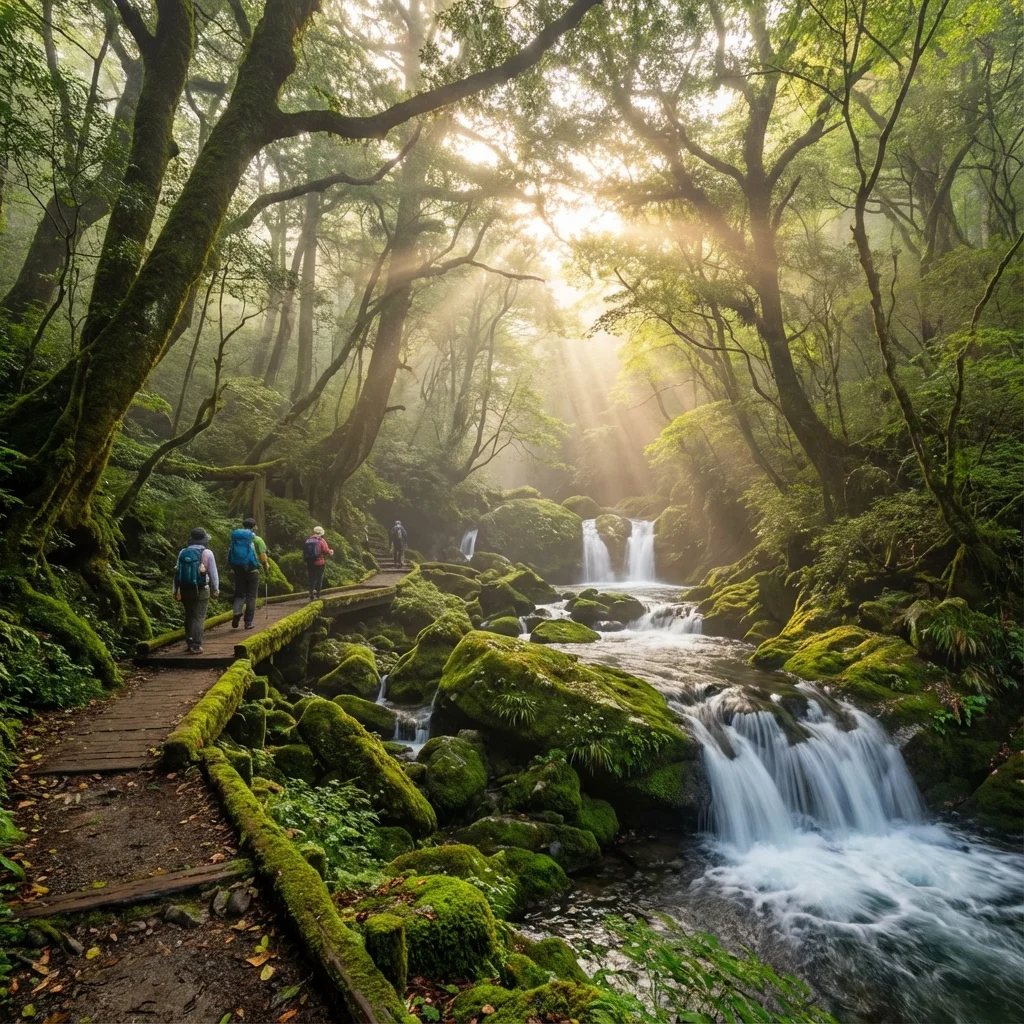
Misty forest trail winding along the river at Kawazu Seven Waterfalls

The Seven Falls, in Trail Order

From the upper trailhead down to the onsen — each fall with its height, its signature feature, and the practical note nobody tells you.

1

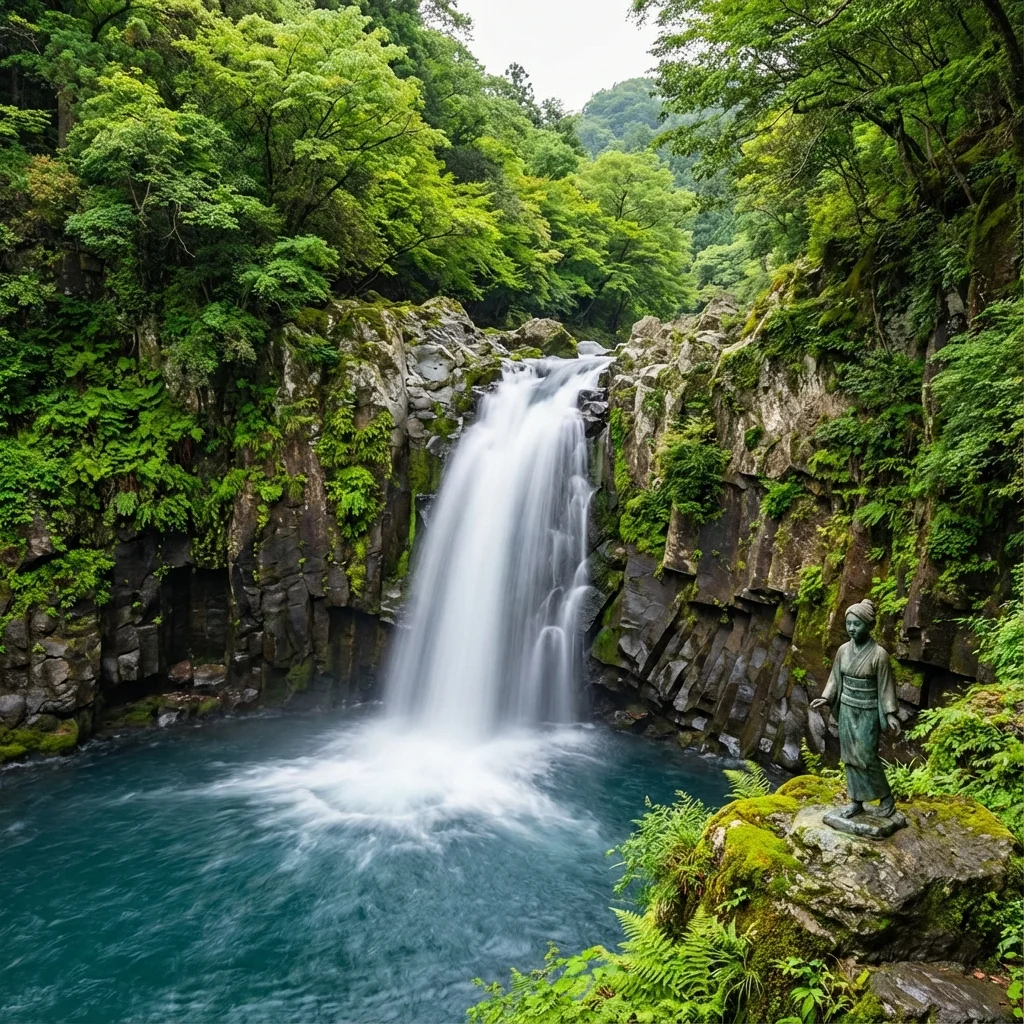
Kamadaru — 22m · Kettle Falls

The tallest fall on the upper trail, pouring down a wall of columnar basalt into a deep kettle-shaped pool. It sets the tone for the whole walk: hexagonal lava columns you will keep seeing all the way down.

Practical: viewed from a dedicated deck — the easiest big-fall photo of the day.
2

Ebidaru — 5m · Shrimp Falls

A short, lively cascade named for the shape of its flow. The draw here is less the fall itself than how you see it: from a suspension bridge slung across the gorge.

Practical: the bridge deck can be slippery with spray — hold the cable, not your phone, on wet days.

3

Hebidaru — 3m · Snake Falls

Small but strange: the basalt around the fall has weathered into a pattern that looks uncannily like snake scales. It rewards a slow look rather than a drive-by glance.

Practical: an easy stop — no detour needed, the trail passes right by.

5

Kanidaru — 2m · Crab Falls

The smallest of the seven — blink and you could miss it. Treat it as a checkpoint and a breather: the forest around it is often the quietest stretch of the walk.

Practical: a good spot to let faster walkers pass on the narrower path.

6

Deaidaru — 2m · Meeting Falls

Named for the confluence where two streams merge into one. It is more a place than a plunge — watch the two currents braid together below the viewpoint.

Practical: from here the trail begins its final descent toward Odaru — the biggest stairs are ahead.

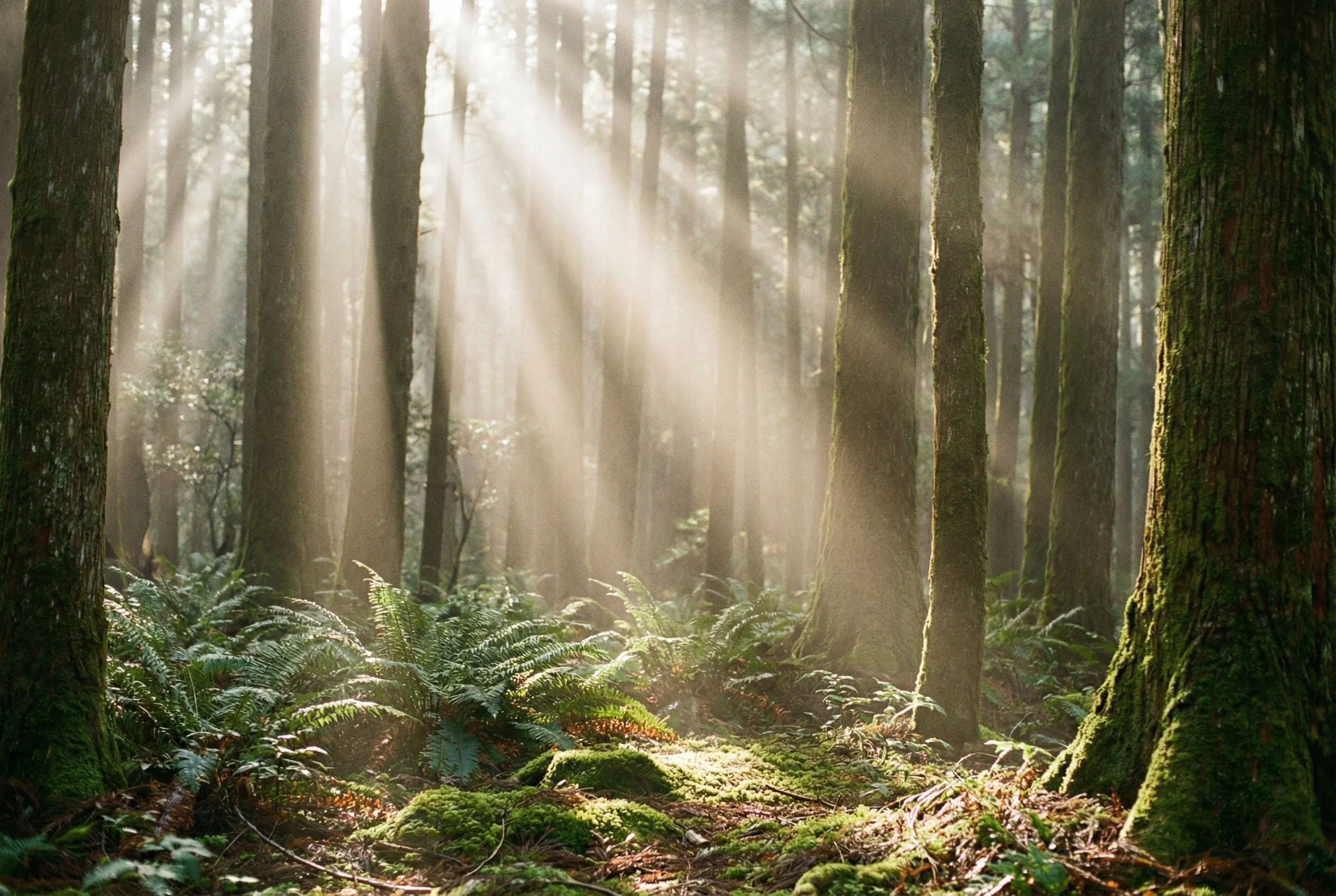
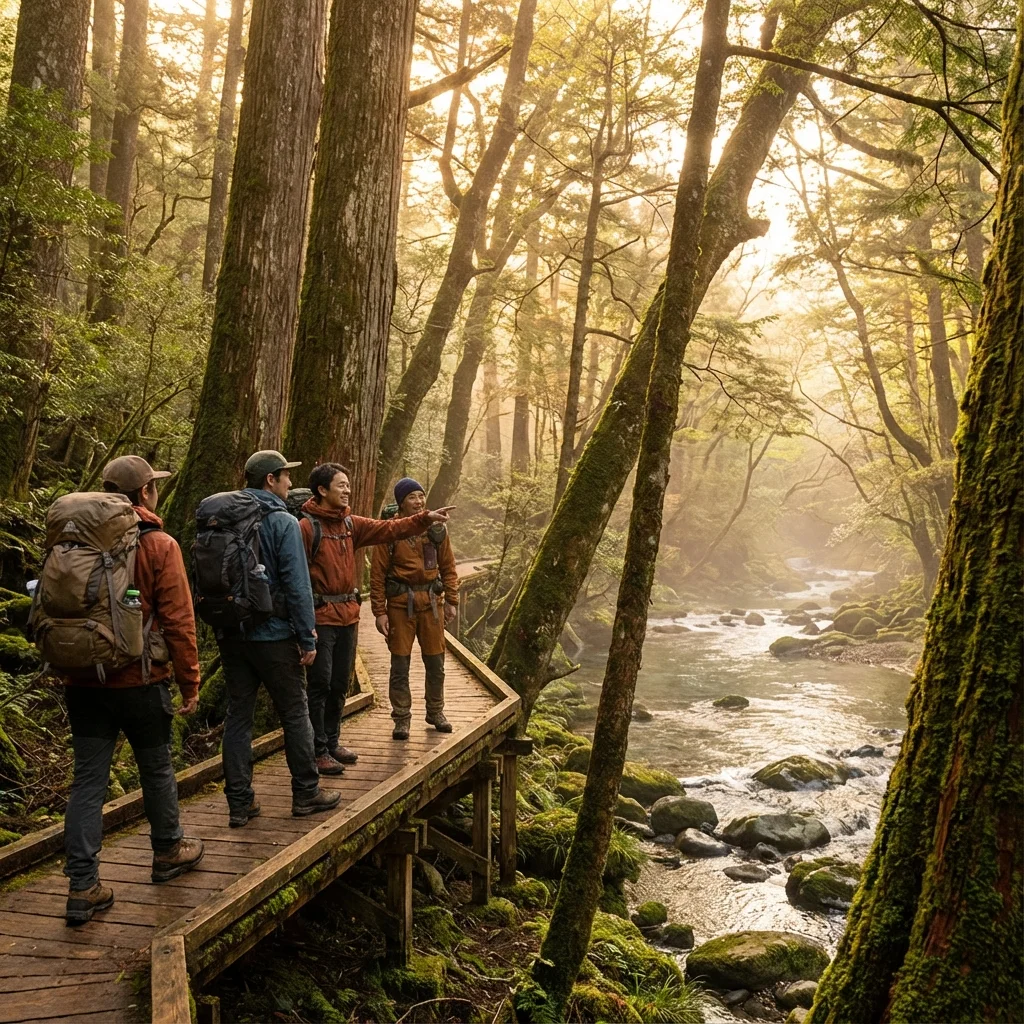
Morning sunlight filtering through the trees along the Kawazu waterfall trail Walkers on the boardwalk section of the Kawazu Seven Waterfalls trail

Is It Worth It?

The most-asked question about this trail deserves a straight answer: yes, for most people — with two honest exceptions.

✅ You will love it if you are…

  • A photographer. Seven falls over columnar basalt within 1.5km, a suspension bridge, morning light rays at Shokeidaru — few short trails pack in this much per step.
  • A casual hiker. Real waterfall scenery without a real hike: 90 minutes, downhill, with an onsen at the end.
  • Visiting during sakura season. While the riverbank festival crowds pack the town below, the waterfall trail is the calm alternative fifteen minutes up the valley. See the seasons guide for timing.

⚠️ Think twice if…

  • Stairs are a barrier. There is no stair-free way to walk the full trail. Wheelchair and stroller users can still reach individual viewpoints — Shokeidaru has an accessible path — but not the whole route.
  • You are expecting Niagara. The tallest fall here is 30m. The appeal is the sequence, the basalt geology, and the forest — not raw scale. Come for seven characterful falls, not one thundering giant.

What to Wear & Bring

👟 On Your Feet & Body

  • Grippy shoes. The stone steps and boardwalks stay wet from spray, and moss makes basalt slick. Sneakers with real tread are fine; smooth soles are not.
  • Quick-dry layers. Waterfall mist plus forest humidity means you will get lightly damp even on a dry day. Skip cotton, bring a light shell.

🎒 In Your Bag

  • A small towel. For the foot baths along the way and the onsen at the end — the reward for finishing at Odaru.
  • Cash in coins. Farmers leave produce at unmanned honesty-box stands along the trail — fruit and vegetables with a price tag and a coin box. Bring change so you can actually buy some.

Trail FAQ

The five questions people actually ask before walking the seven falls.

Yes, for most visitors. In roughly 90 minutes of easy downhill walking you pass seven distinct waterfalls flowing over rare columnar basalt, cross a suspension bridge, and finish at an onsen. Skip it only if stairs are a problem (there are many) or if you are expecting giant falls: the tallest, Odaru, is 30m. For the wider context, see how Kawazu compares with other waterfalls near Tokyo.

About 60 to 90 minutes one way at a relaxed pace, covering roughly 1.5km. Budget the full 90 minutes if you stop for photos at each fall. Walking downhill from the Nanadaru Iriguchi bus stop is the easiest direction — see the transport guide for the bus details.

Seven, in trail order from the top: Kamadaru (22m), Ebidaru (5m), Hebidaru (3m), Shokeidaru (10m), Kanidaru (2m), Deaidaru (2m), and Odaru (30m), the largest, at the Amagiso Onsen. Every one is pinned at its real location on the trail map.

Morning. The light at Shokeidaru, the main photo spot, is best between 8:00 and 10:00 AM, and the trail is quietest before the mid-day tour groups arrive. The stone steps also get slicker as spray builds through the day. Seasonal light and timing notes are in the seasons guide.

Not end to end. Stairs and uneven stone steps appear throughout, so strollers and wheelchairs cannot complete the full route. Some individual viewpoints are easier: Shokeidaru has an accessible path and Kamadaru is viewed from a deck. Reaching Odaru involves steep stairs. The trail map shows both entrances if you plan a partial visit.

Keep Planning