Season-by-Season Walkthrough
Each season changes what the gorge looks, sounds, and feels like. Here is what actually shifts — water volume, color, light, and crowds — so you can pick the version of the trail you want.
🌸 Spring — February to March
Late winter into early spring is Kawazu's headline act: the early-blooming Kawazu-zakura turn the riverbank deep pink, typically from early February into early March. It is spectacular — and packed. Here is the local's move: when the festival crush along the river gets overwhelming, the waterfalls are only about 15 minutes away by bus, and the trail stays remarkably calm even at peak bloom. Cherry trees near the gorge give you blossoms and waterfalls without the elbow-to-elbow riverbank.
For the full story of the blossoms — the original 1955 tree, why this variety blooms so early and lasts so long, and festival details — see our dedicated Kawazu Sakura Guide.
💠 June — Hydrangeas and Fuller Falls
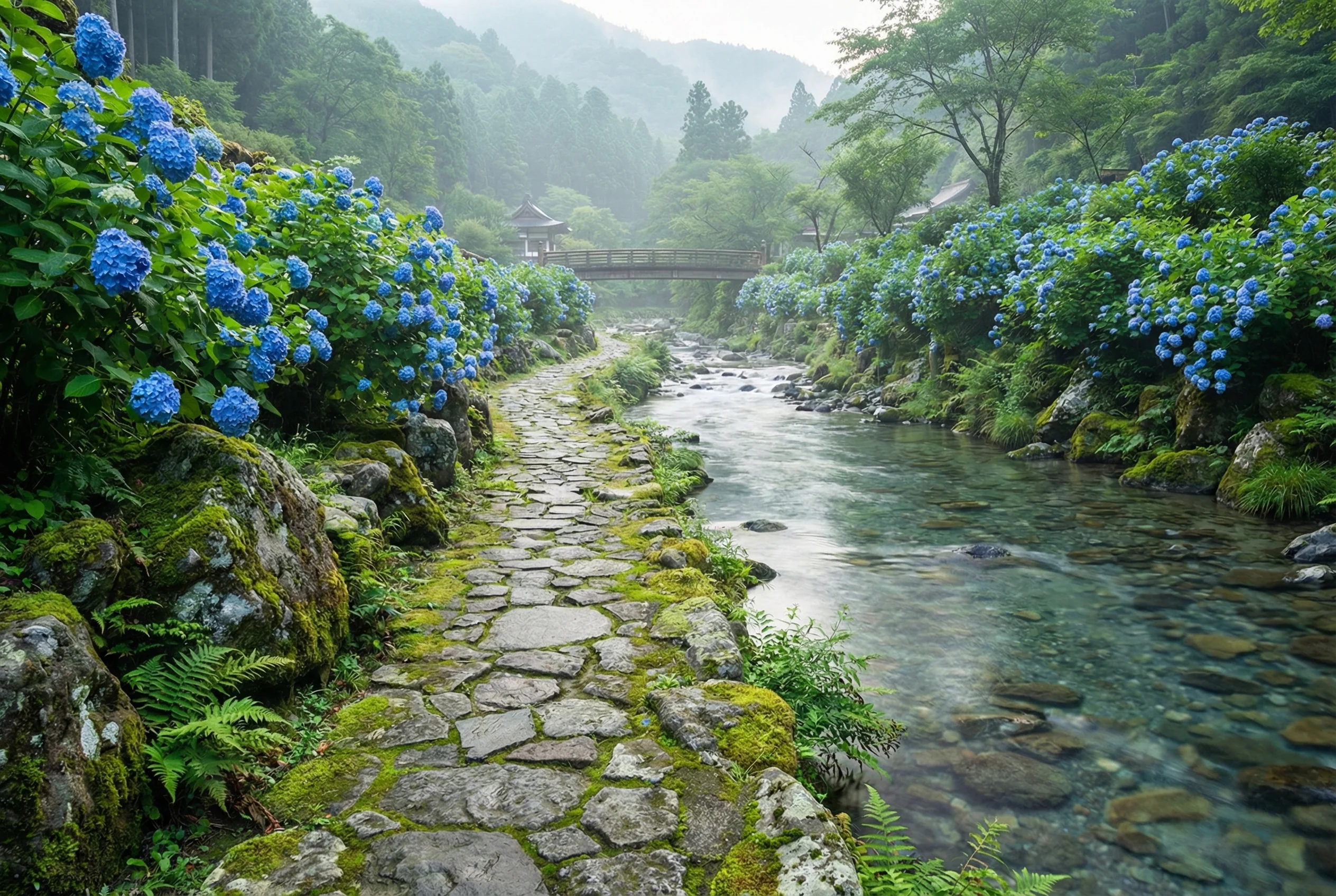
June is the sleeper pick. Hydrangeas line the riverside walking path in blues and purples, and the rainy season — usually treated as a reason to stay home — is a feature here: higher water levels make all seven falls fuller and louder than at any other time of year. Weekday visitors often have entire viewing decks to themselves. Pack a light rain shell and shoes with grip, and go.
🌿 Summer — Green Shade and Cool River Air
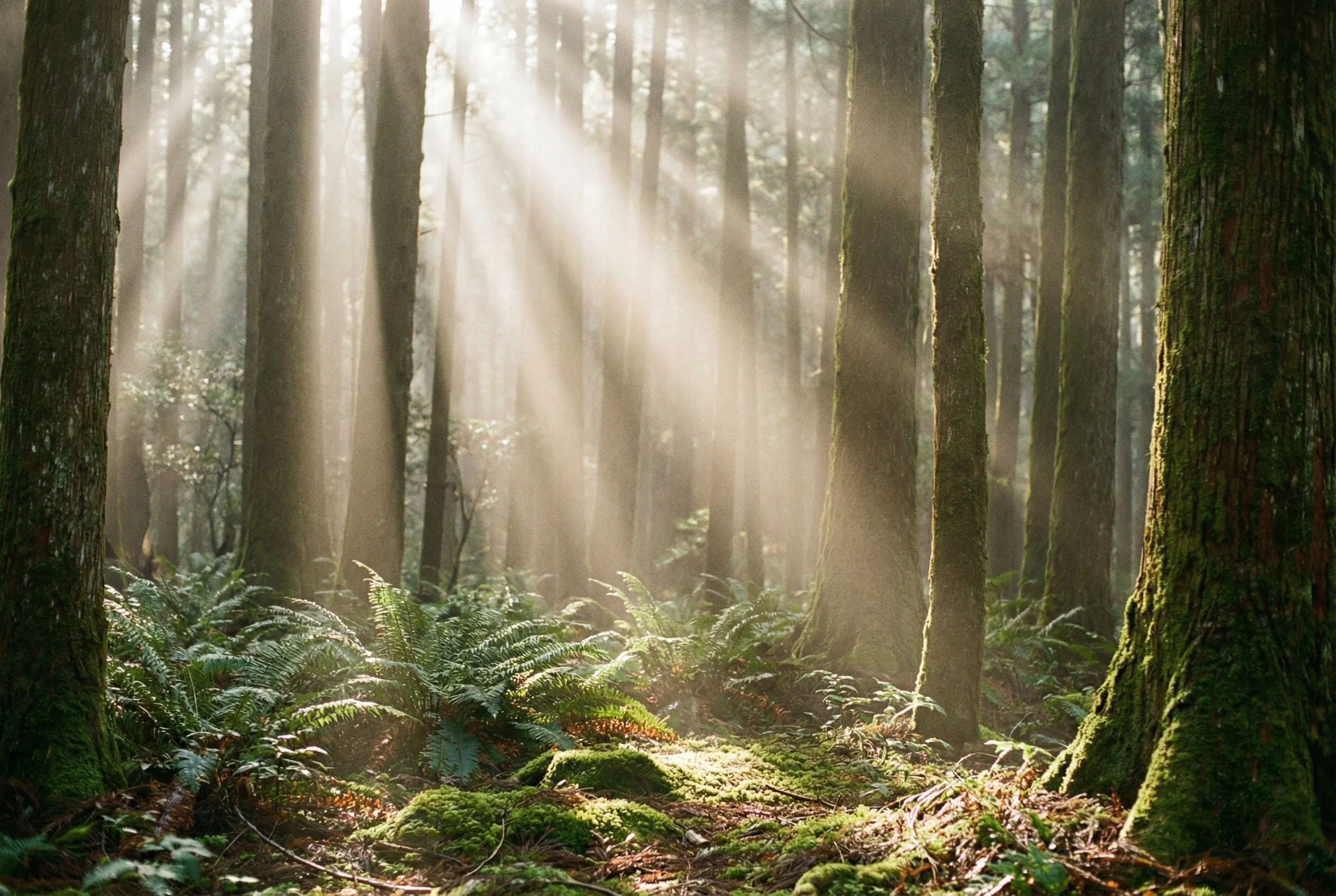
While the Izu coast bakes, the gorge stays noticeably cooler: the canopy closes over the trail, komorebi — sunlight filtering through leaves — dapples the walkways, and the river air takes the edge off the heat. It is the most comfortable way to spend a hot Izu afternoon outdoors. Weekends draw domestic day-trippers, so aim for mornings.
🍁 Autumn — November Momiji
Maple foliage against the dark basalt columns is the gorge's most photogenic pairing. Izu runs late: color typically peaks mid-to-late November, sometimes holding into early December — later than most of Honshu, which makes Kawazu a good last-chance foliage stop. Timing shifts with each year's weather, so check conditions before a long-haul trip built around peak color.
♨️ Winter — Low Crowds, Clear Light, Onsen
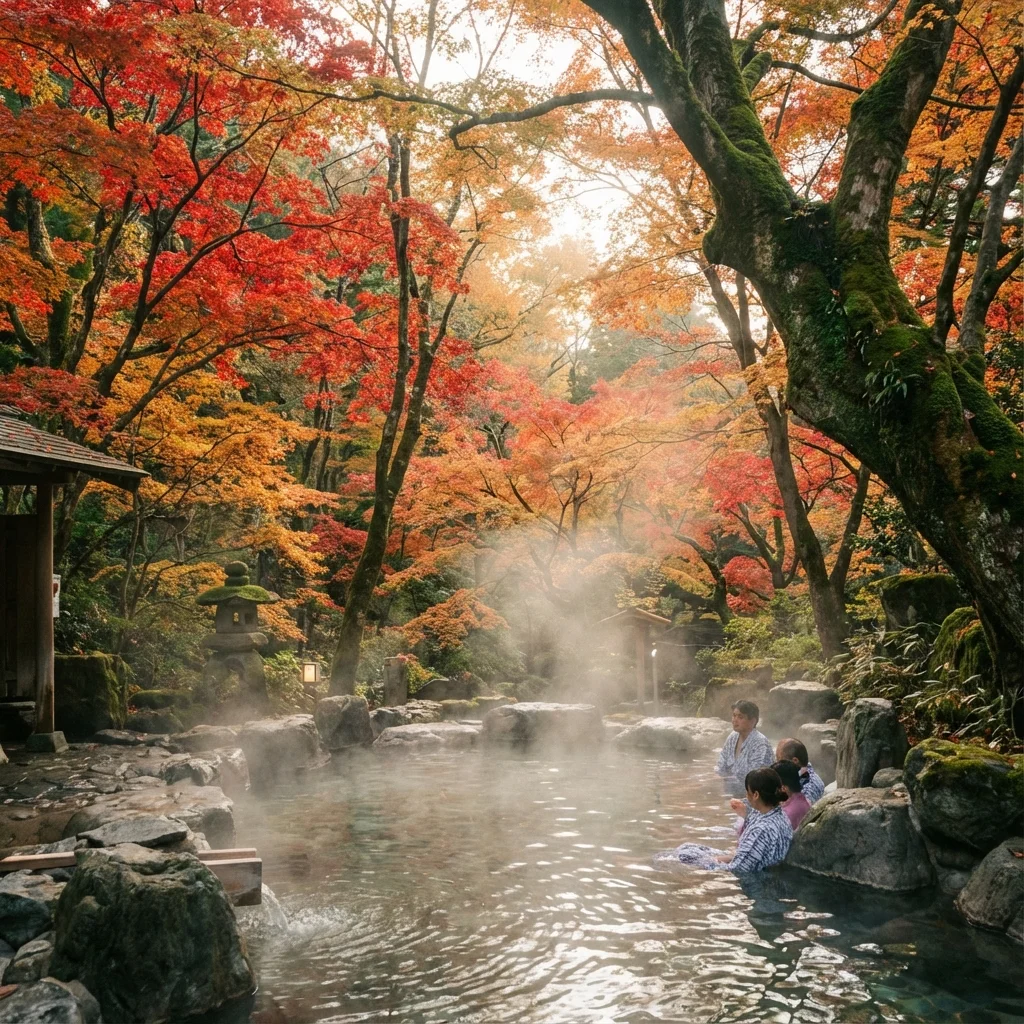
Winter is the quietest season on the trail and, for many, the best-kept secret: crisp, clear light, mist rising off the water on cold mornings, and open-air onsen at their absolute best after the walk. The falls flow year-round, so you lose nothing but the crowds. By late winter, the first Kawazu-zakura buds signal the cycle starting again.
📷 The Photographer's Calendar
Color by Month
- February: deep pink sakura framing the falls — shoot the blossoms as foreground, water as backdrop.
- June: blue and purple hydrangeas along the riverside path, saturated by overcast rainy-season light.
- November: red momiji against the dark hexagonal basalt — the highest contrast scene of the year.
- Winter: bare branches and clear air; the cleanest long-exposure conditions.
Light & Gear
- Best light: 8:00–10:00 AM at Shokei-daru holds year-round — morning sun catches the mist over the plunge pool.
- CPL filter: cuts the glare off perpetually wet rocks and deepens the water color.
- ND filter: for the silky long-exposure water look, especially useful in June when the falls run full.
- Footing: decks and walkways stay damp from spray — brace on railings rather than trusting a tripod on wet boards.
Crowd Calendar — The Honest Version
🔴 February – early March
Festival crush. The famous cherry blossom festival draws millions to the riverbank. The waterfall trail itself stays calmer, but buses, parking, and restaurants all feel it.
🟡 Golden Week & summer weekends
The late-April-to-early-May holiday week and midsummer weekends bring steady domestic crowds. Manageable, but start early.
🟢 June, November & winter weekdays
The quietest windows of the year — often just you, the falls, and the sound of water. This is when the gorge feels like a discovery.
Seasonal FAQ
It depends on what you want. February brings the famous Kawazu cherry blossom festival — and the biggest crowds. For the waterfalls themselves, June (hydrangeas and fuller falls) and November (autumn foliage) offer the best scenery with far fewer people, especially on weekdays. February planning lives in the sakura guide.
No — for the waterfalls it is arguably one of the best times. Rainy-season water levels make all seven falls noticeably fuller, hydrangeas line the riverside path, and the trail is quiet. Bring a light rain shell and shoes with good grip, and check trail conditions after heavy storms. Pack per the what-to-wear list — the stone steps are wet in any season.
Autumn color on the Izu Peninsula arrives late by Japanese standards — the maples along the gorge typically peak in mid-to-late November, sometimes lingering into early December. The exact timing shifts year to year with the weather, so treat these windows as typical rather than guaranteed. Getting there is the same year-round — see the transport guide.
Yes. The falls run year-round, winter brings the lowest crowds of the year and clear, crisp light for photography, and it is peak onsen season — a soak in an outdoor bath after the trail is the classic winter itinerary here. By late winter the early Kawazu-zakura begin to bloom. The bath at the end is Amagiso, at the foot of Odaru — the finale of the trail walk.
Keep Planning
- Kawazu Sakura Guide — the February deep-dive: festival, history, and the original tree.
- Trail Guide — waterfall-by-waterfall walkthrough of the hiking route.
- Transport Guide — trains, the C50 bus, and which stop to use in any season.
- Kawazu Seven Waterfalls Home — highlights, itineraries, and tours.